







September is National Suicide Prevention Month. The 988 Suicide & Crisis Lifeline provides free, confidential support 24/7. Individuals can call, text, or chat 988 to connect with trained crisis counselors. This month, we’ll be sharing resources…
Blog
ARCHIVE
June 10, 2019
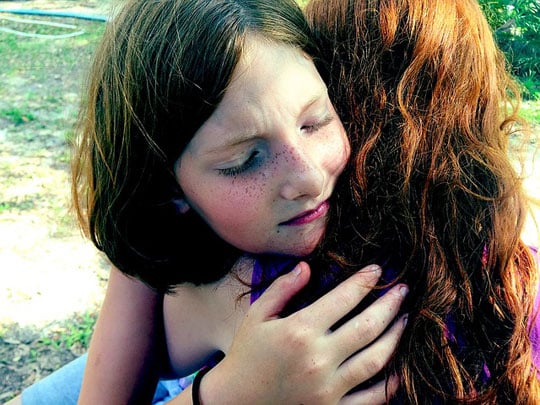
“It’s not just that we’re more aware of adolescent suicide,” said Michael Scharf, MD, chief of child and adolescent psychiatry at the University of Rochester Medical Center and a REACH faculty member. “The rate really is going up. Teen suicide is still rare, but it’s increasing.” Primary care providers (PCPs) can help teens at risk of suicide, first of all, by being willing to talk about it. “Some people think that asking about suicidal ideation makes the kid more likely to act,” said Dr. Scharf. “But evidence shows that asking either has no impact or has a relieving effect; it frees the patient to talk about the issue.” “You need to think ahead of time of what to ask and how, so you feel comfortable,” said Dr. Scharf. “You need a go-to way to assess risk and how likely the kid is to follow through.” (See Resources below.) The assessment results can range from “nothing to do here” to “send this kid to the emergency department.” “The tricky part,” Dr. Scharf said, “is what to do in between.”
Read Article
May 13, 2019
“Mental health flows in both directions, not just downhill from parent to child,” said Peter S. Jensen, MD, founder and board chair of The REACH Institute. The effects on children when caregivers suffer from mental health problems are well documented (see Resources below). Another pattern is that parents and children can share an inherited tendency toward the same disorder. Furthermore, a child’s struggles can trigger disorders such as depression or anxiety in a caregiver. “Blaming parents for their children’s mental health issues is not only a tactical mistake,” said Dr. Jensen, “it’s also simply incorrect.” Pediatric practitioners have to tread carefully when they suspect that the caregiver of a child they are treating has mental health issues.
Read Article
April 12, 2019
Some pediatric primary care providers (PCPs) are nervous about providing mental health services because they are not sure they can be paid. However much they may want to treat patients with mental health disorders, they can’t afford to practice for free! Evaluation and management of mental health conditions is time-intensive. PCPs wonder, “How can I spend 90 minutes doing intake?” Those who work in large healthcare systems worry about the WRVUs (work relative value units) by which their productivity is judged. Providers in small practices worry about getting paid for visits that involve primarily talk. “Primary care providers absolutely can be paid for mental health care,” said Dr. Eugene Hershorin, a coding expert in the Pediatric Department in the University of Miami Health System and a REACH Institute faculty member.
Read Article
March 25, 2019
“Pediatric primary care providers can have a big impact on child mental health simply because we see children early and often,” said Dana Kornfeld, MD, REACH board member and associate clinical professor of pediatrics at George Washington School of Medicine. Dr. Kornfeld, who practices at Pediatric Care Center in Bethesda, MD, endorses the use of cognitive behavioral therapy (CBT) techniques in primary care to nip potentially crippling anxiety in the bud.
Read Article
January 22, 2019
Alana, age 17, comes in complaining that she is tired all the time and struggles to stay awake during school. Or perhaps it’s six-year-old Miko, whose mother tells you that Miko avoids going to bed and often gets up in the middle of the night. Miko says he doesn’t feel sleepy, but his teachers say he is often inattentive and sometimes quarrelsome. The most common sleep problems among young patients are these and other forms of insomnia or insufficient sleep, according to REACH faculty member Robert Kowatch, MD …
Read Article
October 29, 2018
Ryan, age 12, has missed almost three weeks of school so far. He complains of nausea and headache most school days and has to be cajoled into getting out of bed, but his mother says he is fine on weekends. The mother, who is eight months pregnant, is frantic; she can’t afford to take any more time off work before she delivers. School refusal can have serious consequences. On the short term, the child falls behind academically, both the child and the family experience disruption and distress, and there can be legal and financial ramifications. Long-term consequences for school refusers include violent behavior, school dropout, early marriage, and unemployment. “The main goal of treatment is to get the child back to school as soon as possible,” says Lisa Hunter Romanelli, PhD, REACH Institute CEO and clinical psychologist. “Being absent from school is highly reinforcing.” Like many school refusers, Ryan presents somatic complaints. After you rule out physiological causes– not only for these complaints but also for any underlying conditions that can produce depression or anxiety–what’s next?
Read Article
May 24, 2018
In the absence of a single child and adolescent psychiatrist anywhere in Cape May County, New Jersey, The REACH Institute training enabled Rainbow Pediatrics to help families who had nowhere else to turn.
Read ArticleFrom sponsoring a full training cohort to funding an individual scholarship, every dollar expands access to evidence-based mental health care in the communities that need it most.
Explore Ways to GiveGet the latest research, training updates, and practical tools
delivered to your inbox. Join thousands of clinicians working to
improve pediatric mental health outcomes.
Follow us on LinkedIn
September is National Suicide Prevention Month. The 988 Suicide & Crisis Lifeline provides free, confidential support 24/7. Individuals can call, text, or chat 988 to connect with trained crisis counselors. This month, we’ll be sharing resources…
Last week to register! Join REACH on September 18 for Collaborating with Schools in Pediatric Care, a one-day training designed to help clinicians more confidently address school-related behavioral health concerns. Participants will learn practical strategies for…
Nearly half of pediatric outpatient visits involve a behavioral health concern, yet many pediatricians report feeling unprepared to diagnose and treat mental health conditions. While new residency requirements represent an important step forward, there remains a…
Time is running out for primary care clinicians to join a CBT training in 2026 ⏰ The REACH Institute is offering two trainings for clinicians to learn practical, evidence-based cognitive behavioral therapy (CBT) techniques they can…
GET IN TOUCH