

Find the Training That Will Transform Your Practice
Browse REACH’s evidence-based programs for primary care clinicians, mental health clinicians, and school staff — and take the next step toward better care for your patients.
Find Courses

Why Can’t This Kid Sleep? (Teen Edition)
February 12, 2019
Alana, age 17, comes into your office complaining that she can’t sleep at night and struggles to stay awake during school. If she can, she sleeps until noon or later on weekends. “Diagnosis of sleep disorders is often easier with teens than with younger children, as long as you ask the right questions,” said Robert Kowatch, MD, a REACH faculty member who is a pediatric sleep expert at Ohio State University Medical Center/Nationwide Children’s Hospital.

Why Can’t This Kid Sleep?
January 22, 2019
Alana, age 17, comes in complaining that she is tired all the time and struggles to stay awake during school. Or perhaps it’s six-year-old Miko, whose mother tells you that Miko avoids going to bed and often gets up in the middle of the night. Miko says he doesn’t feel sleepy, but his teachers say he is often inattentive and sometimes quarrelsome. The most common sleep problems among young patients are these and other forms of insomnia or insufficient sleep, according to REACH faculty member Robert Kowatch, MD …
GLAD-PC Toolkit Is Here to Help You Treat Depression
November 15, 2018
The new edition of Guidelines for Adolescent Depression in Primary Care (GLAD-PC) is now available on The REACH Institute website. This practical toolkit offers dozens of resources to help pediatric primary care providers diagnose and treat depression.
How to Manage School Refusal
October 29, 2018
Ryan, age 12, has missed almost three weeks of school so far. He complains of nausea and headache most school days and has to be cajoled into getting out of bed, but his mother says he is fine on weekends. The mother, who is eight months pregnant, is frantic; she can’t afford to take any more time off work before she delivers. School refusal can have serious consequences. On the short term, the child falls behind academically, both the child and the family experience disruption and distress, and there can be legal and financial ramifications. Long-term consequences for school refusers include violent behavior, school dropout, early marriage, and unemployment. “The main goal of treatment is to get the child back to school as soon as possible,” says Lisa Hunter Romanelli, PhD, REACH Institute CEO and clinical psychologist. “Being absent from school is highly reinforcing.” Like many school refusers, Ryan presents somatic complaints. After you rule out physiological causes– not only for these complaints but also for any underlying conditions that can produce depression or anxiety–what’s next?

Culturally Responsive Mental Health Screening Tools
September 21, 2018
As you’ve dealt with back-to-school (and back-to-sports) visits, you probably have been challenged by the gap between what’s needed and what’s practical. This visit may be the only time you see this child this year. You know that emotional and mental health is as important as physical health. But you have only so much time for each check-up. Screening tools are a big help…
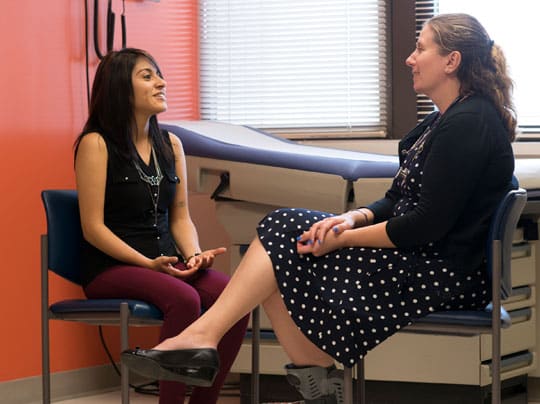
Mental health support for children in foster care
July 11, 2018
“We have kids who come in here on three, four different medications,” says Dr. Elizabeth Wallis, MD, “and we don’t know why. We don’t know what data were used to make those decisions.” Dr. Wallis, director of the Foster Care Support Clinic (FCSC) of the Medical University of South Carolina and a REACH faculty member, was expressing just one of the challenges of treating children and youth in the foster care system.
Getting smarter about child mental health
June 12, 2018
“For these straightforward cases, when you can identify uncomplicated ADHD in patients without co-occuring depression or anxiety – well, everyone in primary care should be able to do this.”

“Now people have a place to go”
May 24, 2018
In the absence of a single child and adolescent psychiatrist anywhere in Cape May County, New Jersey, The REACH Institute training enabled Rainbow Pediatrics to help families who had nowhere else to turn.