

Pediatric Mental Health Training for Residency Programs
Resident Education in Anxiety, Depression and Suicidality (READS) gives residency faculty the skills, confidence, and turnkey tools to teach evidence-based assessment and treatment of anxiety, depression, and suicidality to their residents.
Join the Notification ListWHO IT’S FOR
Designed for the Faculty Shaping Residency Mental Health Training
READS is built for pediatric residency core faculty, child and adolescent psychiatrists, psychologists, and any clinician responsible for resident mental health education. If you shape how the next generation of clinicians learns to care for children’s mental health, READS is for you.
Most pediatric residents graduate without adequate training in mental health. READS changes that by equipping residency faculty with the skills, confidence, and ready-to-use teaching materials to deliver high-quality mental health education to their residents.
This faculty development program focuses on evidence-based assessment, diagnosis, and treatment of anxiety, depression, and suicidality in children and adolescents. Faculty leave not just better trained themselves, but prepared to teach.
The program includes three components:
10 hours of live, expert-led training
delivered virtually across two focused half-day sessions.
A complete, turnkey teaching
toolkit
everything faculty need to begin teaching immediately, including:
- PowerPoint slides for use with residents
- Video recordings of READS training sessions
- Public domain rating scales for anxiety, depression, and suicide risk
- Handouts for residents — diagnosis, treatment, and clinical algorithms
- Dosing guides and medication cards
- Handouts for families and caregivers
Four follow-up implementation sessions
live group calls after the training to help faculty:
- Support implementation with their residents
- Troubleshoot teaching challenges
- Deepen clinical knowledge
- Prepare to confidently answer resident questions
Course dates
Join the notification list to be alerted as soon as new dates are available.
Join the Notification ListHear from READS participants
Hear from the educators who have completed READS and brought transformative mental health training into their residency programs.
“Bringing together a group of motivated academic pediatricians to discuss the importance of teaching behavioral health to residents is such a gift from REACH. We need to tackle this issue as a team and share resources and strategies.”
— Catherine Kent, MD
Pediatrician, Portland, OR
Having the ongoing training and being able to talk to your peers AND have some support from instructors really did help with confidence building. You always question yourself and whether you’re doing the right thing… but when you see improvement, especially working with families and children, it reaffirms that you’re on the right track.
Kristin Mason, LCMHC, MSW, ESMHL
Vermont
Participants earn up to 13.75 CME credits
CME Accreditation
In support of improving patient care, the University of Arkansas for Medical Sciences and The REACH Institute are jointly accredited by the ACCME, ACPE, and ANCC to provide continuing education for the healthcare team.
AMA Credit Designation
This live activity is designated for a maximum of 13.75 AMA PRA Category 1 Credits™. Physicians should claim credit commensurate with their participation.
READS Questions Answered
Everything residency faculty and program directors need to know
about READS — how it works, who it’s for, and how to get started.
The Parent Empowerment Program (PEP) is a REACH training designed for family peer advocates — parents and caregivers of children with mental health challenges who support other families in similar situations. PEP equips participants with clinical knowledge, advocacy skills, and practical tools to help families get the care their children need and deserve.
PEP is for parents and caregivers of children with mental health conditions who work in a peer advocate role — supporting other families navigating diagnosis, treatment, and systems like healthcare and schools. PEP is typically organized by healthcare systems, school districts, or community organizations that want to strengthen family advocacy in their community.
PEP covers the critical knowledge and skills peer advocates need — including problem-identification and priority-setting, engagement, listening and boundary-setting, group management, mental health evaluation, diagnosis and treatment, the mental healthcare system, and school systems and special education options. Participants also receive a comprehensive family empowerment manual and ready-to-use materials.
PEP consists of two components: a five-day interactive seminar, followed by 12 follow-up consultation calls held twice a week over six months. The full program is designed to build knowledge during the seminar and reinforce implementation through sustained consultation support over time.
PEP is delivered to groups of 15 or more and is organized through REACH’s group training infrastructure. Healthcare systems, school systems, and community organizations can schedule and host a PEP training for their community. Contact REACH’s group training team to discuss scheduling and delivery format.
Yes. REACH offers specialized PEP programs tailored for child welfare and juvenile justice settings — designed to help parents and staff work together to address the mental health needs of children involved in those systems. Specialized tracks are available as part of group training arrangements and can be customized to your organization’s needs.
All PEP participants receive a high-quality family empowerment manual and supporting materials — practical, ready-to-use resources that help peer advocates apply their learning and support other families with confidence.
Visit REACH’s Group Training page to learn more about scheduling a PEP for your group. PEP is available for groups of 15 or more and can be organized by healthcare systems, schools, and community organizations. Our team will work with you to find the right format and timeline.
Yes. Join the PEP waitlist to be notified when new training dates or group opportunities become available. You can sign up directly on this page.
Still Have Questions?
Our team is ready to help you find the right training solution for your organization and those you serve.
CONTACT USAdditional Resources
Class aptent taciti sociosqu ad litora torquent per conubia nostra, per inceptos himenaeos. Duis vehicula, libero vitae malesuada elementum, lectus lectus vestibulum neque, sed pretium nunc justo in metus.
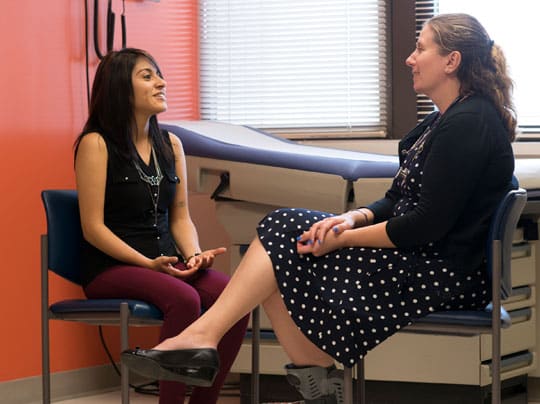
Why Can’t This Kid Sleep? (Teen Edition)
Alana, age 17, comes into your office complaining that she can’t sleep at night and struggles to stay awake during school. If she can, she sleeps until noon or later on weekends. “Diagnosis of sleep disorders is often easier with teens than with younger children, as long as you ask the right questions,” said Robert Kowatch, MD, a REACH faculty member who is a pediatric sleep expert at Ohio State University Medical Center/Nationwide Children’s Hospital.

Why Can’t This Kid Sleep?
Alana, age 17, comes in complaining that she is tired all the time and struggles to stay awake during school. Or perhaps it’s six-year-old Miko, whose mother tells you that Miko avoids going to bed and often gets up in the middle of the night. Miko says he doesn’t feel sleepy, but his teachers say he is often inattentive and sometimes quarrelsome. The most common sleep problems among young patients are these and other forms of insomnia or insufficient sleep, according to REACH faculty member Robert Kowatch, MD …
GLAD-PC Toolkit Is Here to Help You Treat Depression
The new edition of Guidelines for Adolescent Depression in Primary Care (GLAD-PC) is now available on The REACH Institute website. This practical toolkit offers dozens of resources to help pediatric primary care providers diagnose and treat depression.
How to Manage School Refusal
Ryan, age 12, has missed almost three weeks of school so far. He complains of nausea and headache most school days and has to be cajoled into getting out of bed, but his mother says he is fine on weekends. The mother, who is eight months pregnant, is frantic; she can’t afford to take any more time off work before she delivers. School refusal can have serious consequences. On the short term, the child falls behind academically, both the child and the family experience disruption and distress, and there can be legal and financial ramifications. Long-term consequences for school refusers include violent behavior, school dropout, early marriage, and unemployment. “The main goal of treatment is to get the child back to school as soon as possible,” says Lisa Hunter Romanelli, PhD, REACH Institute CEO and clinical psychologist. “Being absent from school is highly reinforcing.” Like many school refusers, Ryan presents somatic complaints. After you rule out physiological causes– not only for these complaints but also for any underlying conditions that can produce depression or anxiety–what’s next?

Culturally Responsive Mental Health Screening Tools
As you’ve dealt with back-to-school (and back-to-sports) visits, you probably have been challenged by the gap between what’s needed and what’s practical. This visit may be the only time you see this child this year. You know that emotional and mental health is as important as physical health. But you have only so much time for each check-up. Screening tools are a big help…
Mental health support for children in foster care
“We have kids who come in here on three, four different medications,” says Dr. Elizabeth Wallis, MD, “and we don’t know why. We don’t know what data were used to make those decisions.” Dr. Wallis, director of the Foster Care Support Clinic (FCSC) of the Medical University of South Carolina and a REACH faculty member, was expressing just one of the challenges of treating children and youth in the foster care system.
Getting smarter about child mental health
“For these straightforward cases, when you can identify uncomplicated ADHD in patients without co-occuring depression or anxiety – well, everyone in primary care should be able to do this.”

“Now people have a place to go”
In the absence of a single child and adolescent psychiatrist anywhere in Cape May County, New Jersey, The REACH Institute training enabled Rainbow Pediatrics to help families who had nowhere else to turn.
Find the Right Training for You
Browse evidence-based training for primary care clinicians, mental health clinicians, school support staff, and healthcare organizations across the U.S.
BROWSE COURSESBetter Mental Health Care Starts Here.
Get the latest research, training updates, and practical tools
delivered to your inbox. Join thousands of clinicians working to
improve pediatric mental health outcomes.
e-mail address
SIGN UPLATEST
LinkedIn Article 1
Lorem ipsum dolor sit amet, consectetur adipiscing elit. Suspendisse varius enim in eros elementum tristique…
LinkedIn Article 1
Lorem ipsum dolor sit amet, consectetur adipiscing elit. Suspendisse varius enim in eros elementum tristique…
LinkedIn Article 1
Lorem ipsum dolor sit amet, consectetur adipiscing elit. Suspendisse varius enim in eros elementum tristique…
GET IN TOUCH
Name*
Name Surname
E-mail Addres*
name@mail.com
Organization
Your organization
Your Message*
Your message…