

School Mental Health Program (SMHP)
Equip Every Adult in the Building to Recognize and Respond to Mental Health Needs.
REACH School Mental Health training gives teachers, counselors, psychologists, administrators, and other school support staff the scientifically proven tools to identify struggling students early and intervene before a challenge becomes a crisis.
WHO IT’S FOR
Designed for the School Staff Who See Children Every Day
SMHP is built for teachers, school psychologists, counselors, and administrators — the adults who are often the first to notice when a child is struggling. SMHP is organized through school systems and districts committed to equipping their staff with practical, evidence-based mental health skills for the classroom and beyond.
Schools are often where mental health challenges first become visible — and school staff are frequently the first adults in a position to act.
This training gives educators and school staff the evidence-based tools to identify students at risk, manage behavioral challenges, and support the mental health needs of the children in their care.
Training is customized for the unique needs of a school and covers any combination of three core areas:
1 Classroom management
Practical strategies to reduce behavioral problems and improve learning environments.
2Early Identification
Proven methods for spotting children at risk for behavioral and emotional difficulties before problems escalate.
3 Effective intervention
Cognitive behavioral strategies for use by school support staff with students presenting with anxiety, depression, disruptive behaviors, and trauma.
Schedule a Training
REACH offers customized school mental health training
for groups of 15 or more educators and school staff.
Visit our Group Training page to learn more about scheduling a training
for your school or district.
Schools Trained. Students Better Supported.
Hear from the educators, counselors, and school leaders who have brought REACH School Mental Health training to their buildings and seen the difference it makes for students.
“Some of the most valuable things in this course are the interventions provided and the discussions on how to implement each intervention. The REACH trainers also take the time to get to know the participants and the information is presented in an interactive way.”
— Behavior Specialist
Brunswick County Schools, NC
“I really appreciated that the presenters have had experience working in the school setting. It was really helpful to hear the presenters’ real life examples of students that they’ve worked with, and makes me feel more confident in the ability to use these strategies in my own work in schools.”
– School Social Worker
Pender County Schools, NC
“The guidance and education I have obtained on mental health issues during this course has truly empowered me. The Mental Health Toolkit will be a valuable resource and awesome to review it with the knowledgeable staff and other school nurses.”
– School Nurse
Virginia
School Mental Health Training Questions Answered
Everything school staff, administrators, and district leaders need to know about REACH’s School Mental Health Program.
The REACH School Mental Health Program (SMHP) is a science-backed training designed to equip school staff — teachers, counselors, psychologists, and administrators — with the tools to identify at-risk students early, manage behavioral challenges effectively, and connect students to evidence-based support. It is delivered to groups of 15 or more and can be organized by school systems and districts.
SMHP is built for any school staff member who works with children — including classroom teachers, school psychologists, counselors, and building administrators. The program is layered: some content applies to all school staff, while deeper clinical content is tailored for psychologists and counselors working directly with students.
SMHP covers three core areas: classroom management strategies that reduce behavioral problems and improve learning environments; proven tools for identifying children at risk for behavioral and emotional problems; and evidence-based therapy programs for school psychologists and counselors supporting students with anxiety, depression, disruptive behaviors, and trauma.
The Action Signs Toolkit is a unique REACH resource that helps teachers and school staff recognize warning signs in students who may be at risk for mental health challenges. It is practical, easy to use, and designed specifically for non-clinical school staff. The toolkit is available as a free download, with a license to use it in your school.
SMHP is delivered as a customized group training for schools and districts with 10 or more participants. REACH works with your institution to schedule and deliver the program in a format that fits your staff and calendar. Contact our Group Training team to discuss delivery options — including on-site and virtual formats.
SMHP is grounded in the same rigorous, evidence-based science that underlies REACH’s clinical training for healthcare clinicians — adapted specifically for the school environment. It equips both non-clinical staff and licensed mental health professionals in the same building, creating a shared language and a more coordinated, effective response to student mental health needs.
SMHP participants receive mental health screening tools designed for school settings, the Action Signs Toolkit, and supporting materials for both classroom application and clinical use. School psychologists and counselors also receive evidence-based therapy frameworks for use with students directly.
Visit REACH’s Group Training page to learn more about scheduling an SMHP for your school or district. SMHP is available for groups of 15 or more. Our team will work with you to identify the right training configuration, timeline, and delivery format for your institution.
Yes. Join the SMHP waitlist to be notified when new training opportunities become available. You can sign up directly on this page. If you’re looking to organize a group training for your school or district, contact our Group Training team directly to get started.
Still Have Questions?
Our team is ready to help — whether you’re a teacher, a counselor, or
a district leader looking to bring REACH training to your school.
Additional Resources
Download the Action Signs Toolkit — free, with a school use license.

Suicide crisis among Black youth
As suicidality among adolescents generally has declined in the past three decades, suicide attempts among Black adolescents have risen, according to a November 2019 article in Pediatrics. A report to the Congressional Black Caucus (CBC) says that rates of suicide death have risen more for Black youth than for any other racial or ethnic group. A growing concern is that Black youth are less likely to report suicidal thoughts but more likely to attempt suicide; Black males are more likely to suffer injury or death as a result. Suicidality is also increasing among younger children. The reasons for these changes are not clear. However, the risk factors for suicidality and underlying mental health conditions among Black children and youth are myriad.
Helping patients & families cope with chronic disease
In treating young patients who have chronic physical conditions, health care professionals focus — as they must — on alleviating the physical suffering caused by the disease. However, as a graduate of the REACH course Patient-Centered Mental Health in Pediatric Primary Care, you know the importance of supporting the mental and emotional health of young patients and their caregivers. A new article in Pediatrics highlights the importance of mental health care for families dealing with chronic illness.
New AAP policy on mental health in pediatric care
The American Academy of Pediatrics (AAP) has released a new policy and an accompanying technical report on mental health competencies for pediatric clinicians. REACH faculty member Cori Green, MD, MS, is a lead author of both documents. We asked Dr. Green, director of behavioral health education and integration at Weill Cornell Medicine in New York City, what the AAP policy and technical report mean for alumni of the REACH program Patient-Centered Mental Health in Pediatric Primary Care. “I hope they’ll be excited to see that what is being endorsed by AAP is essentially what they were taught in their REACH training,” Dr. Green said. In the technical report, the REACH course is described as a promising practice in continuing medical education.
Building a team to counter school refusal
“When it comes to school refusal, getting all the adults on the same page is the bottom line,” said James Wallace, MD, a REACH faculty member. “Until you have that, you have nothing.” Dr. Wallace, who teaches child psychiatry at the University of Rochester (New York) Medical Center School of Medicine and Dentistry, described an approach to school refusal that unites primary care providers, schools, and mental health professionals in helping families make choices that support regular school attendance. “An evidence-based approach to school refusal, and the anxiety or depression that usually underlie it, includes cognitive behavior therapy and sometimes medication,” said Dr. Wallace. “But there’s a third piece: getting all of the adults involved, including the parents, to address the social-emotional components of school attendance in a consistent way.”
Helping patients deal with school shooter anxiety
According to the National Center for Education Statistics, 92% of public schools had formal active shooter plans in 2016, and 96% conducted lockdown drills. These measures are intended to keep children safe, but they may do as much harm as good. The title of a September 4 New York Times article sums it up: “When Active Shooter Drills Scare the Children They Hope to Protect.” We asked REACH faculty member Jasmine Reese, MD, MPH, about how students react to active shooter drills and what pediatric primary care providers (PCPs) can do. Dr. Reese is Director of the Adolescent and Young Adult Specialty Clinic at Johns Hopkins All Children’s Hospital in St. Petersburg, Florida. “We have yet to see data on whether these drills are causing more anxiety and other mental health issues among students,” said Dr. Reese. “But it seems clear in practice that they can either cause anxiety and depression or exacerbate existing issues.”
Helping patients manage the transition to college
“Going to college is exciting, but students need to know that this experience, though positive, may also be stressful,” said REACH faculty member Elena Man, MD. Dr. Man recommends resources and strategies that pediatric primary care clinicians can use to prepare patients for this significant transition to a new environment for learning, living, and friendships.
How PCPs can prevent teen suicide
“It’s not just that we’re more aware of adolescent suicide,” said Michael Scharf, MD, chief of child and adolescent psychiatry at the University of Rochester Medical Center and a REACH faculty member. “The rate really is going up. Teen suicide is still rare, but it’s increasing.” Primary care providers (PCPs) can help teens at risk of suicide, first of all, by being willing to talk about it. “Some people think that asking about suicidal ideation makes the kid more likely to act,” said Dr. Scharf. “But evidence shows that asking either has no impact or has a relieving effect; it frees the patient to talk about the issue.” “You need to think ahead of time of what to ask and how, so you feel comfortable,” said Dr. Scharf. “You need a go-to way to assess risk and how likely the kid is to follow through.” (See Resources below.) The assessment results can range from “nothing to do here” to “send this kid to the emergency department.” “The tricky part,” Dr. Scharf said, “is what to do in between.”
What if the child’s caregiver has mental health issues too?
“Mental health flows in both directions, not just downhill from parent to child,” said Peter S. Jensen, MD, founder and board chair of The REACH Institute. The effects on children when caregivers suffer from mental health problems are well documented (see Resources below). Another pattern is that parents and children can share an inherited tendency toward the same disorder. Furthermore, a child’s struggles can trigger disorders such as depression or anxiety in a caregiver. “Blaming parents for their children’s mental health issues is not only a tactical mistake,” said Dr. Jensen, “it’s also simply incorrect.” Pediatric practitioners have to tread carefully when they suspect that the caregiver of a child they are treating has mental health issues.
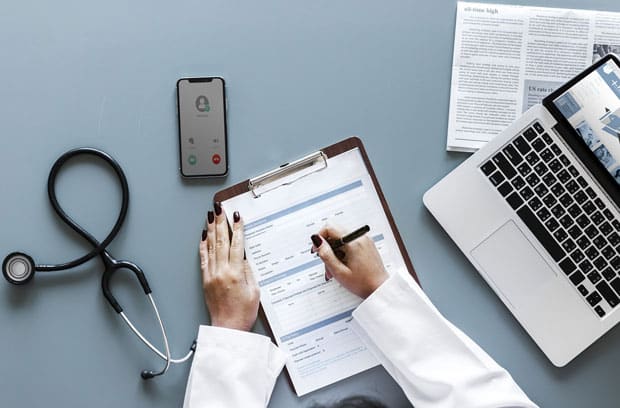
5 Tips on Coding for Mental Health in Primary Care
Some pediatric primary care providers (PCPs) are nervous about providing mental health services because they are not sure they can be paid. However much they may want to treat patients with mental health disorders, they can’t afford to practice for free! Evaluation and management of mental health conditions is time-intensive. PCPs wonder, “How can I spend 90 minutes doing intake?” Those who work in large healthcare systems worry about the WRVUs (work relative value units) by which their productivity is judged. Providers in small practices worry about getting paid for visits that involve primarily talk. “Primary care providers absolutely can be paid for mental health care,” said Dr. Eugene Hershorin, a coding expert in the Pediatric Department in the University of Miami Health System and a REACH Institute faculty member.

How Pediatric Professionals Can Use Cognitive Behavioral Therapy to Address Anxiety
“Pediatric primary care providers can have a big impact on child mental health simply because we see children early and often,” said Dana Kornfeld, MD, REACH board member and associate clinical professor of pediatrics at George Washington School of Medicine. Dr. Kornfeld, who practices at Pediatric Care Center in Bethesda, MD, endorses the use of cognitive behavioral therapy (CBT) techniques in primary care to nip potentially crippling anxiety in the bud.
Find the Right Training for You
Browse evidence-based training for primary care clinicians, mental health clinicians, school support staff, and healthcare organizations across the U.S.
BROWSE COURSESBetter Mental Health Care Starts Here.
Get the latest research, training updates, and practical tools
delivered to your inbox. Join thousands of clinicians working to
improve pediatric mental health outcomes.
e-mail address
SIGN UPLATEST
LinkedIn Article 1
Lorem ipsum dolor sit amet, consectetur adipiscing elit. Suspendisse varius enim in eros elementum tristique…
LinkedIn Article 1
Lorem ipsum dolor sit amet, consectetur adipiscing elit. Suspendisse varius enim in eros elementum tristique…
LinkedIn Article 1
Lorem ipsum dolor sit amet, consectetur adipiscing elit. Suspendisse varius enim in eros elementum tristique…
GET IN TOUCH
Name*
Name Surname
E-mail Addres*
name@mail.com
Organization
Your organization
Your Message*
Your message…